


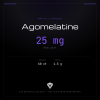
Agomelatine Powder 1g For Sale
Description
Agomelatine Research Standard
Agomelatine is a synthetic melatonergic agent and a structural analogue of melatonin. In laboratory research, it is classified as an atypical psychotropic reference standard, functioning as a selective agonist at melatonin MT1 and MT2 receptors and a selective antagonist at 5-HT2C serotonin receptors. It is widely utilized in neuroscience research to investigate circadian rhythm resynchronization, neurogenesis, and the molecular mechanisms underlying mood-related neuropharmacology in experimental models.
Technical Specifications
| Property | Specification |
|---|---|
| Product Name | Agomelatine |
| CAS Number | 138112-76-2 |
| Chemical Formula | C15H17NO2 |
| Molecular Weight | 243.30 g/mol |
| Chemical Class | Naphthalenic derivative (Melatonergic) |
| Physical Appearance | White to off-white powder |
| Assay Purity | Refer to the batch-specific Certificate of Analysis (COA) supplied for the lot received |
Mechanism of Action & Research Context
Agomelatine’s research utility is defined by its unique dual-action profile, distinct from conventional monoamine-based agents.
-
Melatonergic Agonism: Agomelatine binds with high affinity to MT1 and MT2 melatonin receptors, mimicking the signaling of endogenous melatonin. This is used in experimental models to probe the resynchronization of circadian rhythms and the modulation of sleep-wake cycle disturbances.
-
5-HT2C Antagonism: By acting as a selective antagonist at 5-HT2C receptors, the compound disinhibits the release of norepinephrine and dopamine, particularly within the frontal cortex. Researchers utilize this mechanism to study the synergistic interplay between melatonergic signaling and monoaminergic release in neuroplasticity models.
-
Neuroprotective Signaling: Investigations focus on the compound’s ability to promote hippocampal neurogenesis, upregulate BDNF expression, and improve neuronal plasticity, providing a probe for studying resilience in neurodegenerative or stress-response paradigms.
Storage & Handling Guidelines
Store at controlled room temperature. Keep tightly closed.
Storage guidance is a house recommendation. Analytical documentation is per-lot release testing.
Research Use Only Disclaimer: This product is developed and distributed strictly as a Research Use Only (RUO) laboratory reference chemical intended exclusively for non-clinical analytical and scientific investigation. It is not an FDA-approved drug, medical treatment, dietary supplement, or food ingredient, and is strictly prohibited for human or animal consumption. Kimera Chems supplies this research material solely to qualified institutions and professional investigators for authorized laboratory research.
| Compound Class | Naphthalenic derivative / Melatonergic |
| CAS Number | 138112-76-2 |
| Other Names | Thymanax, Valdoxan, 138112-76-2, N-(2-(7-Methoxynaphthalen-1-yl)ethyl)acetamide, S20098, S-20098, Melitor, AGO-178, AGO 178, CHEMBL10878, UNII-137R1N49AD |
| IUPAC Name | N-[2-(7-methoxynaphthalen-1-yl)ethyl]acetamide |
| Molecular Formula | C₁₅H₁₇NO₂ |
| Molecular Weight | 243.3 |
| Capsule Concentration | 25mg x 60ct |
| Bulk Powder Quantity | 1g |
Be the first to review “Agomelatine Powder 1g”
Related products

Nootropics For Sale
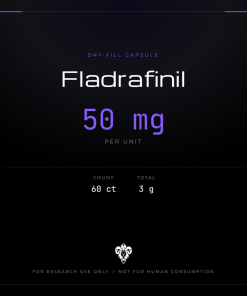
Nootropics For Sale
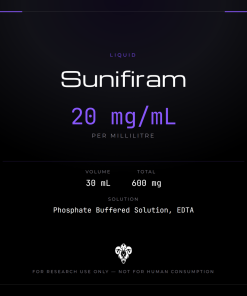
Nootropics For Sale
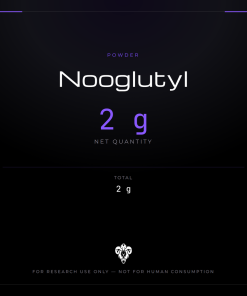
Nootropics For Sale
Nootropics For Sale

Nootropics For Sale
Nootropics For Sale
Nootropics For Sale
Reviews
There are no reviews yet.