


SR-9011 Powder 1g For Sale
Description
SR-9011 Research Standard
SR-9011 (CAS 1379686-29-9) is a synthetic ligand developed against the nuclear receptors REV-ERBα and REV-ERBβ, which link the circadian clock to metabolic gene expression. It is supplied as a reference standard for circadian and metabolic research. One caveat belongs at the top rather than buried: its effects have been shown to be only partly attributable to REV-ERB, so it should not be used as a proxy for REV-ERB activity without a receptor-null control.
Mechanism of Action & Research Context
-
The founding characterisation. SR-9011 was introduced alongside its close analogue as a synthetic REV-ERB agonist with in vivo activity. Administration altered circadian behaviour and the circadian expression pattern of core clock genes in mouse hypothalamus, and shifted the circadian expression of metabolic gene arrays in liver, skeletal muscle and adipose tissue with increased energy expenditure.[1]
-
The specificity problem. A conditional double-knockout mouse model showed that SR9009 decreases cell viability, rewires cellular metabolism and alters gene transcription in hepatocytes and embryonic stem cells lacking both REV-ERBα and REV-ERBβ. The authors conclude directly that its effects cannot be used solely as a surrogate for REV-ERB activity.[3] Any experiment attributing a result to REV-ERB on the strength of this ligand alone is under-controlled.
-
Cell-viability effects. Independent work reports that REV-ERB ligands are selectively lethal to cancer cells and oncogene-induced senescent cells while sparing normal cells, with regulation of autophagy and de novo lipogenesis central to the apoptotic response.[2] Read alongside the knockout result, cytotoxicity in a given system needs its own receptor-dependence control.
-
Endogenous ligand context. REV-ERB activity is regulated by ligands including naturally occurring heme, which is the relevant physiological comparator in binding and reporter work.[3]
Research Applications
Primary fields of in vitro and preclinical laboratory investigation include:
-
Circadian gene expression profiling across core clock genes in tissue and cell models.[1]
-
Receptor-dependence controls using REV-ERBα/β-null backgrounds to separate on-target from off-target effects.[3]
-
Metabolic gene array work in liver, skeletal muscle and adipose tissue.[1]
-
Autophagy and lipogenesis assays alongside cell-viability readouts.[2]
-
Analytical method development for chromatographic and mass-spectrometric identification.
Analytical Documentation
Purity and identity vary by manufacturing lot. Kimera Chems does not publish a single fixed purity figure for this item; refer to the batch-specific Certificate of Analysis (COA) issued for the lot received, which reflects third-party analytical testing for that lot.
| Compound Class | Synthetic REV-ERBα |
| CAS Number | 1379686-29-9 |
| Other Names | SR9011, SR 9011, VYI79FLZ6W, CHEMBL1961797, UNII-VYI79FLZ6W, GTPL8900, DTXSID601045516, BDBM50366239, CS-4668, PPUYOYQTTWJTIU-UHFFFAOYSA-N |
| IUPAC Name | 3-[[(4-chlorophenyl)methyl-[(5-nitrothiophen-2-yl)methyl]amino]methyl]-N-pentylpyrrolidine-1-carboxamide |
| Molecular Formula | C₂₃H₃₁ClN₄O₃S |
| Molecular Weight | 479.0 |
| Capsule Concentration | 15mg x 60ct |
| Liquid Concentration And Solution | 30mg/ml (PEG400, DMSO) |
| Aliquot Concentration And Solution | 50mg/ml (MCT Oil, Benzyl Benzoate, Benzyl Alcohol) |
| Bulk Powder Quantity | 1g |
Be the first to review “SR-9011 Powder 1g”
Related products
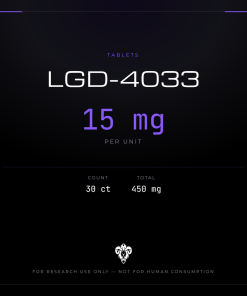
Selective Modulators For Sale

Selective Modulators For Sale
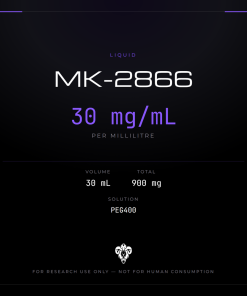
Selective Modulators For Sale
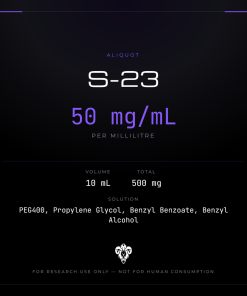
Selective Modulators For Sale

Selective Modulators For Sale

Selective Modulators For Sale
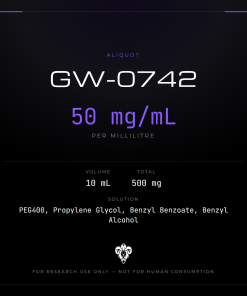
Selective Modulators For Sale
Selective Modulators For Sale
Reviews
There are no reviews yet.